
Anxiety has terrible timing.
Your thoughts are already racing, your shoulders are somewhere near your ears, and then someone tells you to meditate.
Right. Like that’s going to happen.
You close your eyes, try to focus on your breathing, and within seconds you’re thinking about an awkward conversation from three years ago, whether you locked the door, and why your breathing suddenly feels strange.
That does not mean you are bad at meditation.
Meditation cannot guarantee that anxiety will disappear. It simply gives your attention somewhere steadier to return to. Start with one or two minutes, and stop if the practice makes you feel more distressed.
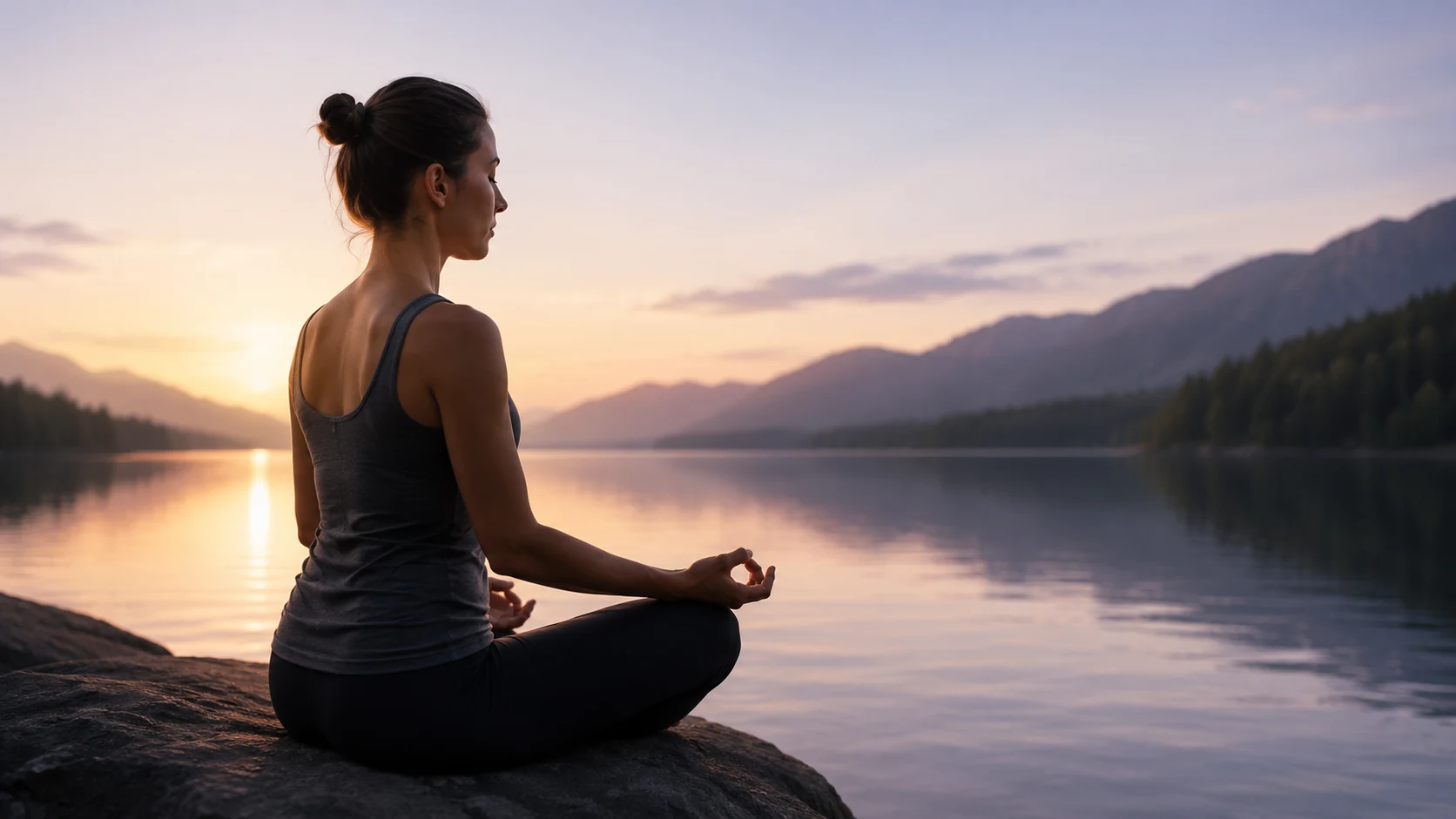
1. Begin With Comfortable Breathing
Anxiety can make breathing feel fast, shallow, or tight.
Sit somewhere comfortable and let your shoulders drop slightly.
Then:
- Breathe in gently through your nose.
- Breathe out slowly without forcing the air.
- Notice where you feel the breath most clearly.
- Repeat for one or two minutes.
Your breathing does not need to be unusually deep. Comfortable is enough.
If counting helps, count slowly to three as you breathe in and four as you breathe out. If counting makes you more tense, forget the numbers.
Quiet Meditation Music can provide a steady background when silence feels distracting.
2. Notice Where Anxiety Sits in the Body
Anxiety is not only a thought. It often appears in the body first.
Your jaw tightens. Your hands grip the phone. Your stomach feels braced. Your shoulders slowly rise toward your ears.
Try a quick body check.
Move your attention from your forehead to your jaw, shoulders, hands, stomach, legs, and feet. When you notice tension, ask whether that area can soften slightly.
Not completely.
Just a little.
You are not forcing yourself to relax. You are simply noticing what is already happening.
Soft Relaxing Music or gentle Nature Sounds may help make the space feel less demanding.
3. Try the 5-4-3-2-1 Grounding Exercise
When anxious thoughts pull you into the future, grounding can bring your attention back to the room you are actually in.
Notice:
- 5 things you can see
- 4 things you can feel
- 3 things you can hear
- 2 things you can smell
- 1 thing you can taste
The answers do not need to be interesting.
You might notice a mug, the fabric of your sleeve, traffic outside, or the taste of water.
The goal is not instant calm. It is to remind yourself that you are here, dealing with this moment rather than every possible future problem at once.
4. Use a Listening Meditation
Focusing on breathing is not comfortable for everyone. Sometimes listening feels easier.
Choose one steady sound:
- Rain Sounds
- Nature Sounds
- White Noise
- A fan
- Flowing water
- Soft instrumental music
Listen without analysing every detail.
Notice when the sound becomes louder, softer, closer, or farther away. Your thoughts will interrupt. When they do, return to the sound.
Keep the volume low. The audio should support your attention rather than compete for it.
5. Walk Instead of Sitting Still
Meditation does not have to mean sitting cross-legged with your eyes closed.
When anxiety makes stillness uncomfortable, walk slowly around a room, garden, or familiar outdoor space.
Notice the feeling of each foot touching the ground, the movement of your legs, the temperature of the air, and the rhythm of your steps.
You do not need to walk dramatically slowly or make the practice look formal.
Just walk and notice.
Low-volume Meditation Music or Relaxing Music may help, provided you can still hear your surroundings.
When Meditation Goes Off Track
A normal meditation session may look like this:
You sit down, set a five-minute timer, and decide to focus on your breath. After one breath, you remember an email. Then your leg starts itching. Then you wonder whether the timer is actually running.
You check.
Only forty-two seconds have passed.
It is tempting to decide that meditation is not for you. But wandering, fidgeting, checking, and starting again do not mean you failed.
They are the practice.
The useful moment is when you notice, “I’ve wandered again,” and return without turning it into a personal defeat.
Even if that happens twenty times.
What If Meditation Makes Anxiety Worse?

Meditation does not feel calming for everyone.
Closing your eyes, sitting quietly, or focusing inward may sometimes make anxious thoughts or physical sensations feel stronger.
You do not need to push through distress.
Try one of these instead:
- Keep your eyes open
- Practise for only one minute
- Focus on an external sound
- Walk instead of sitting
- Hold a cool object
- Stop and do an ordinary activity
- Speak with someone you trust
Meditation is a tool, not a test.
A Two-Minute Practice
When you need something simple:
- Place both feet on the floor.
- Notice three things you can see.
- Relax your jaw and shoulders.
- Take three comfortable breaths.
- Listen to one steady sound.
- Remind yourself: “I only need to handle this moment.”
You may not feel completely calm afterward.
That is okay.
A small reduction in tension still matters.
When to Seek Support
Meditation may help with everyday stress, but it is not a replacement for professional care.
Consider speaking with a qualified healthcare or mental health professional if anxiety is persistent, difficult to control, or interfering with sleep, work, relationships, or daily activities.
Final Thoughts
Meditation for anxiety does not require a silent mind.
You may fidget. Your thoughts may wander. You may check the timer after forty-two seconds.
Start anyway.
Choose one breath, one sound, or one physical sensation. When your attention leaves, bring it back gently.
That return is the practice.
References
- NHS — Breathing Exercises for Stress
- National Center for Complementary and Integrative Health — Meditation and Mindfulness: Effectiveness and Safety
- National Institute of Mental Health — Generalized Anxiety Disorder: What You Need to Know